

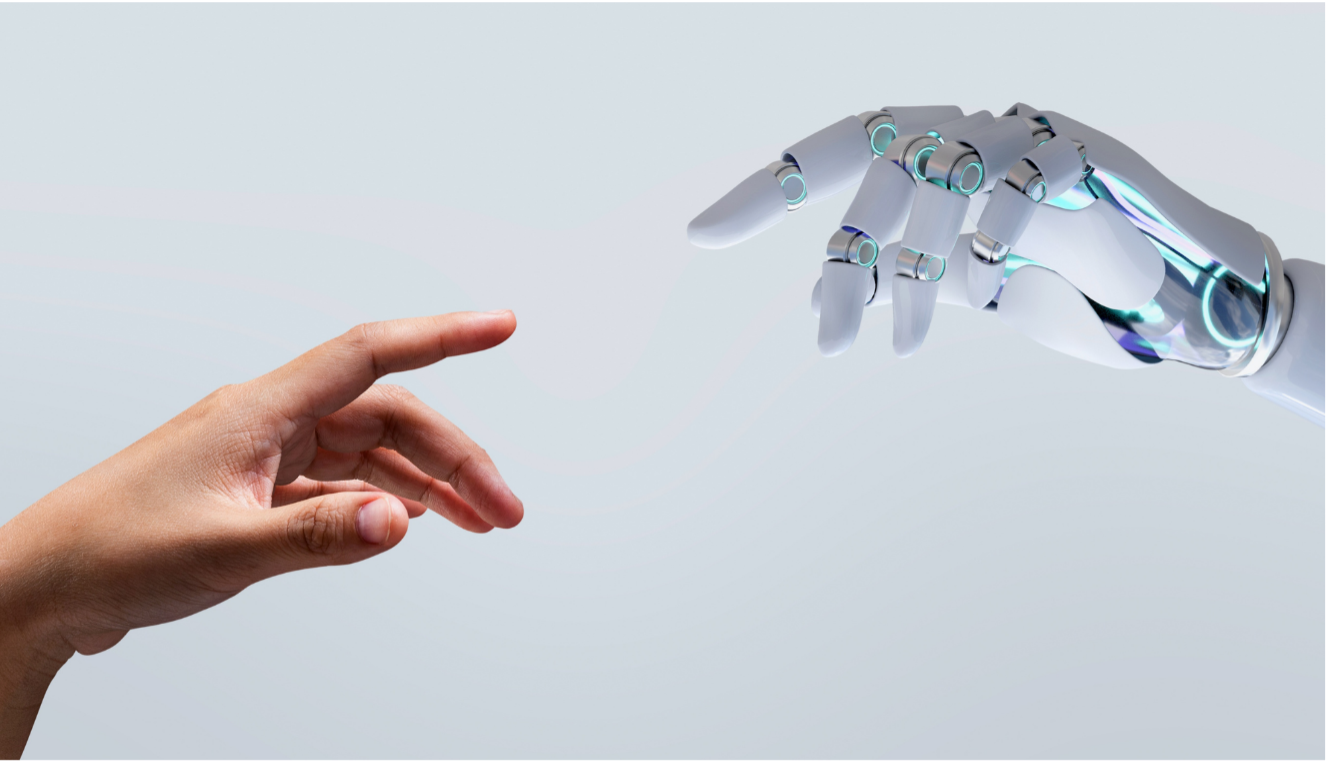
Interpersonal relationships are slowly being eroded. We started in the Covid era with virtual interactions, and now find ourselves in the AI revolution. What does this mean for successful negotiations?
The Human Element AI Can’t Replace
Artificial Intelligence is transforming negotiation. Yet even as AI becomes more capable, one area remains unchanged – skilled negotiators bring not only creativity and strategy to the table, but Emotional Intelligence (EI) and deep awareness of human behaviour.
Artificial Intelligence is brilliant at logic, fact and data. But there is one capability AI still lacks: human Emotional Intelligence. And it is precisely this missing ingredient which determines whether AI enhances negotiations or undermines them. Humans don’t just operate on logic, we thrive on emotions, empathy, and social connection. Negotiation isn’t just about facts, figures, or logic — it’s about people and Emotional Intelligence equips us to anticipate and manage the human side of negotiation.
Neuroscience shows us why. The core skills underpinning effective negotiation arise from brain systems which AI does not possess, those controlling empathy, emotional regulation, threat detection, and perspective-taking.
AI can provide behavioural predictions, and verbal cues, but only EI can interpret the emotions underpinning those signals. However, when negotiators combine AI with high-level EI, they gain a measurable advantage. EI acts as the bridge between data-driven insights and context-sensitive judgment.
The Limits of AI in Real-World Interactions
AI is transforming negotiation, but it cannot replace the human ability to read emotions, build trust and relationships, and navigate complex interpersonal dynamics. AI can misinterpret tone, cultural nuance, sarcasm, or power dynamics, for example.
Emotional Intelligence ensures that AI becomes an additional tool, not a risk:
| AI Strengths | EI Strengths | |
| Data analysis | Human empathy | |
| Logical structure | Understanding hidden needs | |
| Speed & accuracy | Ethical judgment | |
| Scenario modelling | Trust-building & relationships | |
| Simulations | Creativity |
Whilst AI will be able to provide information on organisational issues ask yourself – what part does it play in drilling down into the personal interests, needs, wants? Only carefully placed questions will lead you to these answers (however AI can help you craft the right conversations).
In the future, the successful negotiators will not be those who rely solely on algorithms, but those who skilfully combine AI’s analytical power with the depth, empathy, and intuition of human EI.
Research is still scant in this field, however a recent experiment by Kim, Cundiff & Choi (2014) found that negotiators with higher EI invoke more trust and a stronger desire to work together again.
What Neuroscience Reveals About Negotiation
Modern neuroscience shows that effective negotiators rely on coordinated activity across several brain systems: those controlling emotional regulation, social bonding, threat detection, empathy etc. Understanding these systems highlights why Emotional Intelligence (EI) remains crucial when AI is introduced into negotiation environments.
Researchers at MIT established that using ChatGPT regularly demonstrated reduced brain connectivity and lower creativity. EY found that almost 80% of Gen Z professionals use AI tools for over half their work tasks, yet many lack the skills to evaluate when AI outputs are wrong or inappropriate. How can you encourage greater individual creative thinking in your teams?
At the heart of controlled, strategic negotiation is the prefrontal cortex (PFC) in our brain, responsible for planning, decision making, creativity and registering long-term consequences – key skills of a proficient negotiator. High-stakes negotiation activates this region heavily, enabling negotiators to suppress emotional reactivity and remain focused on long-term outcomes. Emotional Intelligence strengthens this PFC regulation, allowing negotiators to stay strategic even under pressure.
In contrast, the amygdala—the brain’s threat-detection centre—responds instantly to perceived unfairness, ambiguity, or interpersonal friction. This can trigger defensiveness, anger, rigid positions. Skilled negotiators recognise early signs of amygdala activation in themselves and others. They use techniques such as reframing, strategic pauses, carefully chosen tactics and counters to prevent emotional escalation. No AI system today can detect or modulate these human biological responses in real time; only an emotionally attuned negotiator can.
Therefore, AI + EI = the optimal combination, where AI handles logic and data, and humans handle emotion, nuance, and trust.
In a recent corporate contracting negotiation, an AI system generated optimal concession paths, yet the turning point in the deal occurred when the human lead negotiator noticed subtle hesitation from the counterpart. Drawing on EI, she invited an open discussion about underlying concerns. By validating emotions and adjusting the tone, not the numbers, she re-established trust, allowing the AI-generated recommendations to be accepted.
AI can analyse patterns, predict behaviours, and optimise strategies faster than any human. But it cannot feel tension in the room, anticipate emotional triggers, read body language or build trust.
The New Negotiator: Blending AI With EI
Negotiators who thrive in this new AI world will recognise the need to combine these 3 factors:
- Emotional Intelligence: Reading emotions, regulating reactions, recognising triggers and building trust.
- Neuroscientific Awareness: Understanding their own brain’s behaviour and recognising how to influence the Other Party’s brain
- AI Integration: Leveraging artificial intelligence while retaining human connection.
Negotiation has always been part data, part psychology, and part biology. In an era of accelerating AI, the negotiator who understands the mind, both human and artificial, will be the one who consistently shapes outcomes, relationships, and long-term value to win those aspirational outcomes.
If you’d like to explore more on emotion and emotional responses in negotiation, follow the links below for deeper insights.
Does emotion defeat logic in negotiation?
Fight or Flight? Tips on managing emotional response
References
Ernst & Young (EY). How can we upskill Gen Z as fast as we train AI?
Kim, K., Cundiff, N. L. A., & Choi, S. B. The influence of emotional intelligence on negotiation outcomes and the mediating effect of rapport: A structural equation modeling approach. Negotiation Journal, MIT Press.
Kosmyna, N., Hauptmann, E., Yuan, Y. T., Situ, J., Liao, X.-H., Beresnitzky, A. V., Braunstein, I., & Maes, P. Your brain on ChatGPT: Accumulation of cognitive debt when using an AI assistant for essay writing tasks. MIT Media Lab.
Written by Melanie Lilley
Melanie Lilley is a negotiation and influencing strategist, accredited coach, and specialist in applying behavioural neuroscience to leadership, communication, and negotiation. With over 30 years in corporate management and training, she helps individuals achieve lasting change by developing growth mindsets.
